
Building a Smarter Live Merch Business
Merch has always been more than a t-shirt on a table. It can be an important source of revenue, a powerful extension of an artist’s brand, and one of the most tangible ways for fans to connect with the music.
But the approach to merch needs to evolve.
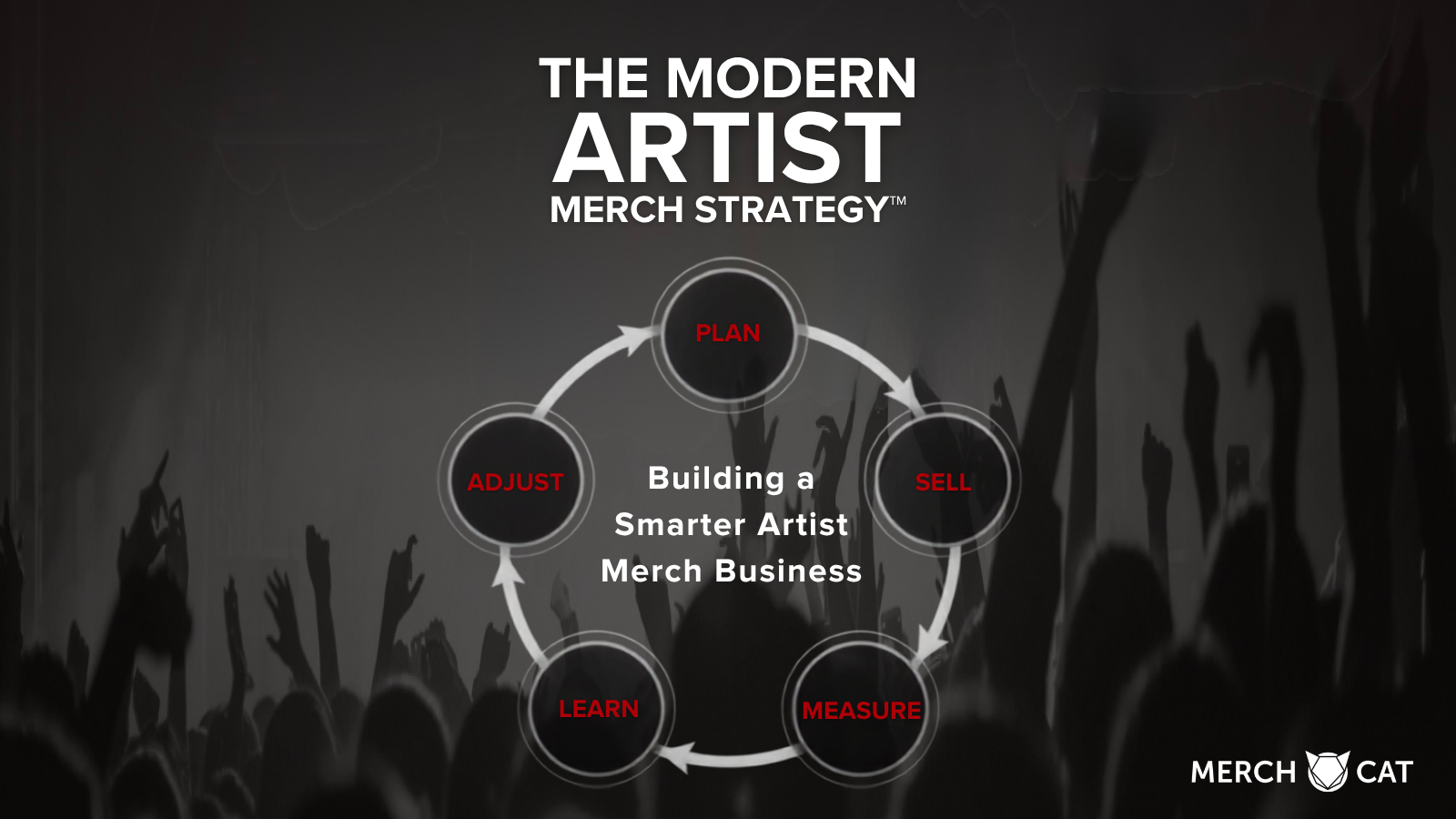
That’s the thinking behind The Modern Artist Merch Strategy™, a framework we’ve developed at Merch Cat for approaching merch as a business, not an afterthought.
Plan → Sell → Measure → Learn → Adjust
The framework looks at the bigger picture: fans, brand, products, pricing and profitability, where and how merch is sold, inventory and data, and what can be learned along the way.
We’re starting where Merch Cat started: at the live show.
Live merch gives artists something especially valuable: immediate feedback. Every show is an opportunity to learn what fans respond to, what they’re willing to spend, what sells in different markets, and what you might do differently next time.
Here’s how to start thinking more strategically about it.
1. Start With Your Fans
Your merch strategy shouldn’t begin with what you want to make. It should begin with the people you expect to buy it.
Who are your fans? What do they connect with? What are they likely to wear, collect, display, or take home as a reminder of the experience?
The answers may be different for every artist.
Pay attention to what fans are already telling you, both through what they say and what they buy. Your audience can help inform everything from product selection and design to pricing and quantities.
2. Build the Right Merch Mix
More products don’t necessarily mean more sales.
A strong merch assortment gives fans choices without overwhelming them or tying up too much money in inventory.
Think about offering products at different price points. A fan who isn’t ready to buy a $40 shirt may happily buy a $10 or $15 item. Another fan may be looking for something more substantial or exclusive.
Apparel may be the foundation of the table, but physical music, accessories, limited items, signed products and other creative offerings can broaden the mix.
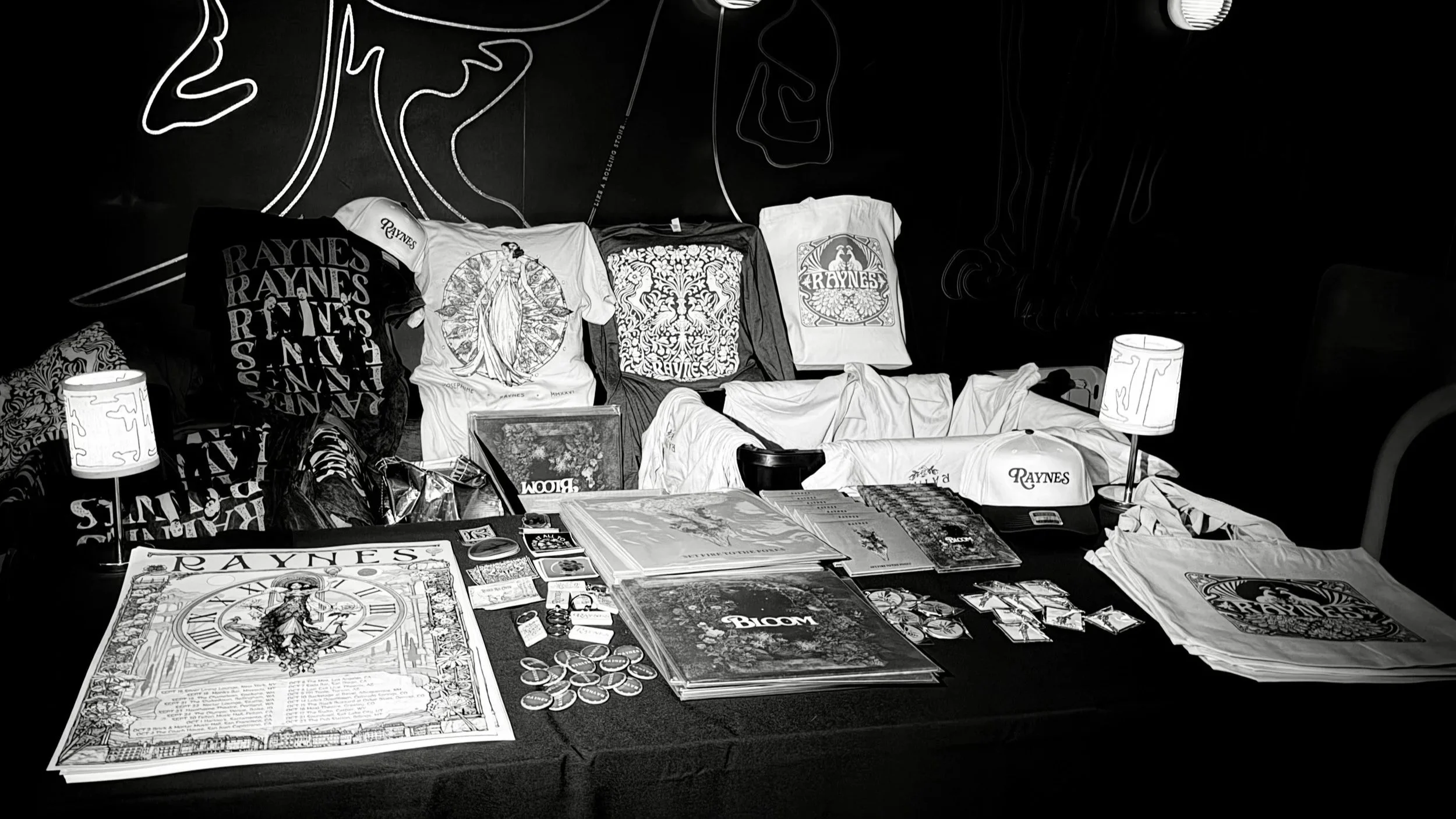
Raynes merch table featuring a mix of apparel, physical music, accessories and fan-made items.
The goal isn’t to have everything. It’s to have the right mix for your fans.
3. Price With Purpose
Pricing should account for more than what another artist is charging.
Start with your actual cost, including production, shipping, venue cuts or commissions when applicable, and other expenses associated with getting that product into a fan’s hands.
Then consider your audience, your market and the perceived value of the item.
Understanding the margin on each product helps you see what is actually contributing to your merch business, not just what is generating the most revenue.
A product can be a bestseller and still not be your most profitable item.
4. Treat Every Live Show as Data
Every show tells you something.
Track what sold, how many units moved, which sizes were most popular, how much revenue each product generated, and how sales differed from one market or venue to another.
One useful metric is Dollars Per Head, which compares merch revenue to attendance. Looking at that number across multiple shows can help you identify patterns that total sales alone may not reveal.
A $2,000 merch night at one show and a $2,000 merch night at another may look identical until you consider that one had 300 people in the room and the other had 1,000.
The more consistently you capture information, the more useful it becomes.
5. Make the Live Experience Count
Merch is also part of the fan experience.
Your table should be visible, organized, and easy to shop. Pricing should be clear. Products should be displayed in a way that makes it easy for fans to understand what’s available.
And don’t underestimate the interaction itself.
The merch table is one of the few places where the artist’s brand, the live experience, and a direct transaction with a fan all meet. Done well, that moment can strengthen the connection long after the show is over.

6. Maximize the Value of Physical Music
Physical music can play a unique role at the merch table. For some fans, buying a CD, vinyl record or other eligible physical release at a show is about more than the music itself. It’s a tangible reminder of the experience and a way to support the artist directly.
Eligible physical music sales from live shows may also be submitted to Luminate, whose data contributes to the music industry’s sales reporting and Billboard charts.
Merch Cat includes integrated Luminate reporting to help artists capture and submit eligible live-show physical music sales as part of their merch workflow.
That means physical music can serve several purposes at once: generating revenue, strengthening the fan connection, and ensuring eligible sales are properly reported.
7. Measure, Learn, and Adjust
The real value of collecting merch data comes from what you do with it.
After a show or run of shows, look at what happened.
What sold fastest? What barely moved? Which sizes ran out? Which products generated the strongest margins? Did certain markets perform differently? How did your Dollars Per Head compare from one show to another?
Then use what you learned.
Adjust quantities. Refine the product mix. Revisit pricing. Test something new. Bring more of what worked to the next show and reconsider what didn’t.
That’s also why we built Merch Cat: to give artists the tools to manage their live merch, track inventory and sales, understand what’s happening at each show, and use that information to make smarter decisions going forward.
Merch Is a Business and an Art